CPTCorr
CPTCorr is a Cone Penetration Test (CPT) analysis app that analyses the data for various correlations, soil behaviour interpretation, stratigraphy profiling, and geotechnical parameter estimation. Supports .csv and .txt data files.
Please note that CPTCorr is currently only available on the App Store in Australia, Brunei, Canada, Hong Kong, Indonesia, Japan, South Korea, Macau, Malaysia, New Zealand, Singapore, Taiwan, Thailand, UK, and US.
Please reach out to us if you like to see the App available in your region or if you have any queries.
Who is CPTCorr for?
Students: Deepen understanding of empirical geotechnical correlations and stratigraphy profiling.
Professionals: Review soil classification index values and parameters directly out in the field. Generate PDF report directly from the App.
Researchers: Process .csv and .txt data logs instantly without desktop scripting tools.
Organisations: Equip site investigation and geotechnical teams with a mobile CPT interpretation tool for use inside and outside of the workplace.
Break free from network license servers and node-locked keys and let your team work seamlessly anywhere.
Download the Trial Version^ Today.
^View and export qc, fs, u2, qt, ft, and Rf to PDF for free in the Trial Version. Subscribe to the Pro Version to unlock additional parameters.


Features
■ Supports metric and imperial unit conversion.
■ Import cone penetration test (CPT) data files in .csv and .txt formats. [Sample CPT files here from USGS website, please note that you will be leaving our website. We are not responsible for the content or safety of external sites.]
■ Analyse the data for various correlations, soil behaviour interpretation, stratigraphy profiling, and geotechnical parameter estimation*.
■ Visualise CPT results through interactive charts and depth profiles and streamline subsurface investigation workflows for engineers and geotechnical professionals.
■ Includes feature to export the processed data to PDF.
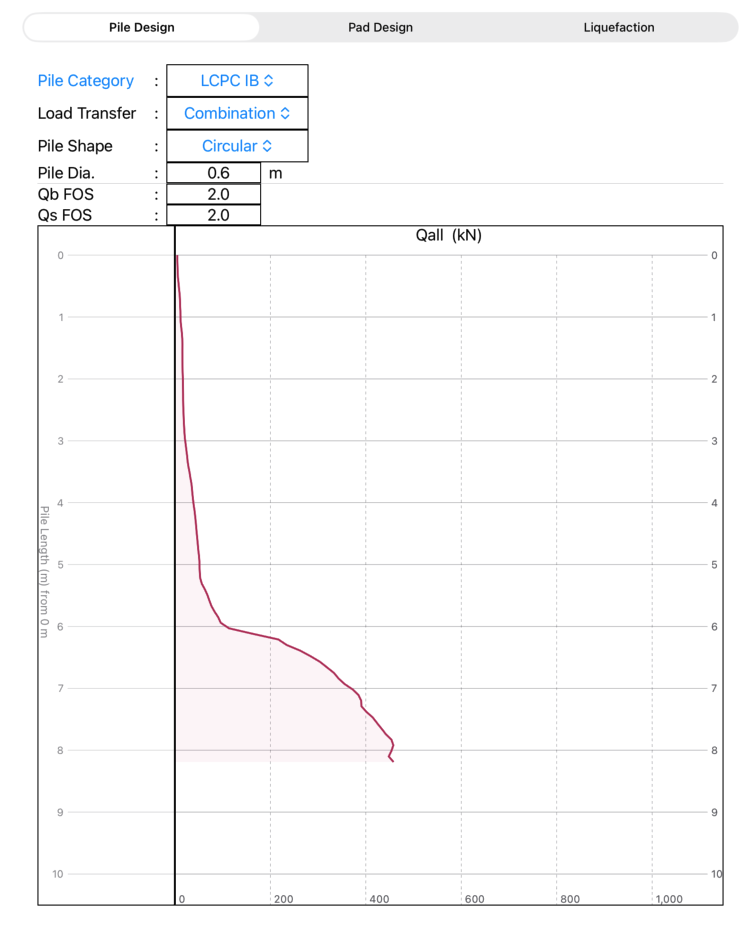
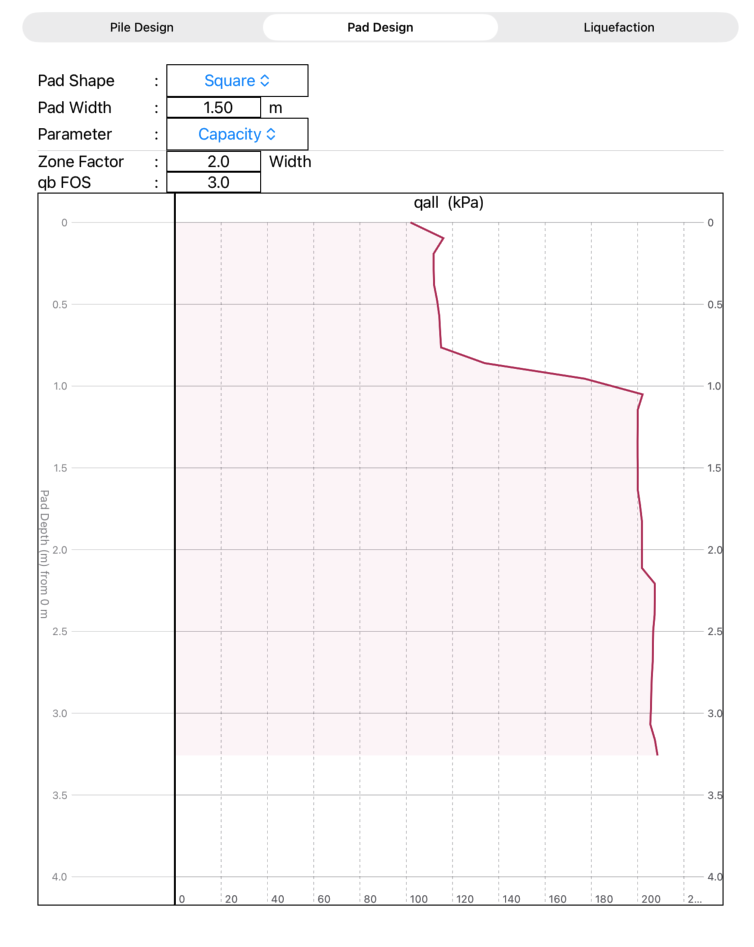
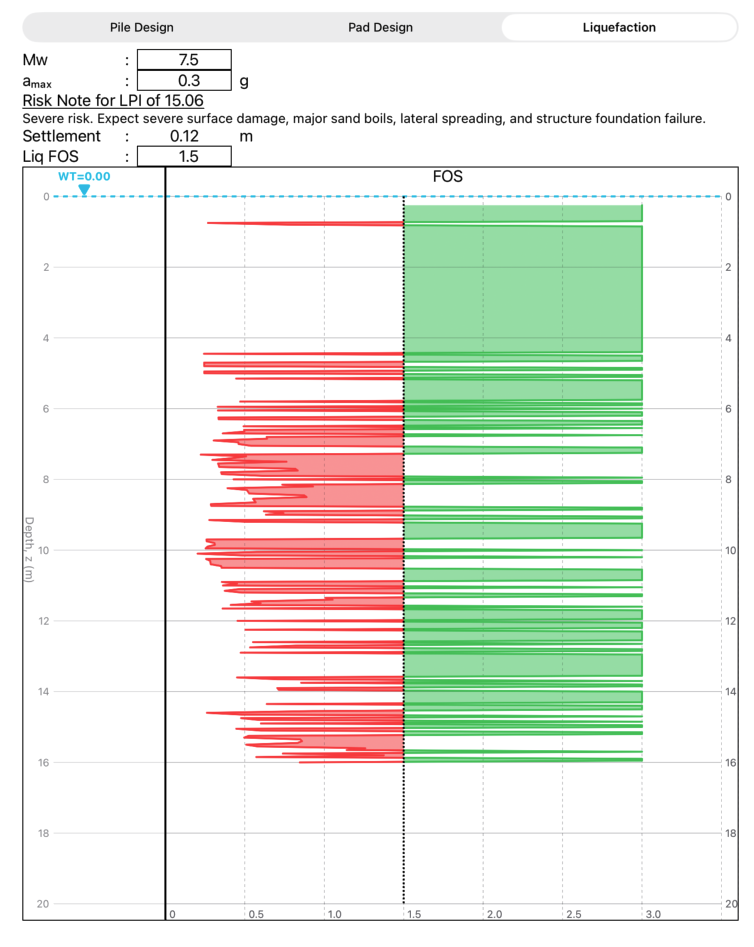
■ UNDER DEVELOPMENT! Design modules* for deep foundation, shallow foundation and liquefaction potential.
*Some features are only available in the Pro Version. Pro Version requires a paid subscription.
We welcome feedback from the geotechnical community. If you have recommendations for further CPT empirical correlations backed by recent literature or regional data, please share them with us.
Tutorial Videos
Features Under Development
■ Native support for standard .AGS file format.
■ Peat soil classification.
■ Design modules for deep foundation, shallow foundation and liquefaction potential. Final details to be confirmed.
Report Feature
■ Quick and reliable to generate report.
■ Export visual results to PDF. Try it in the trial version.
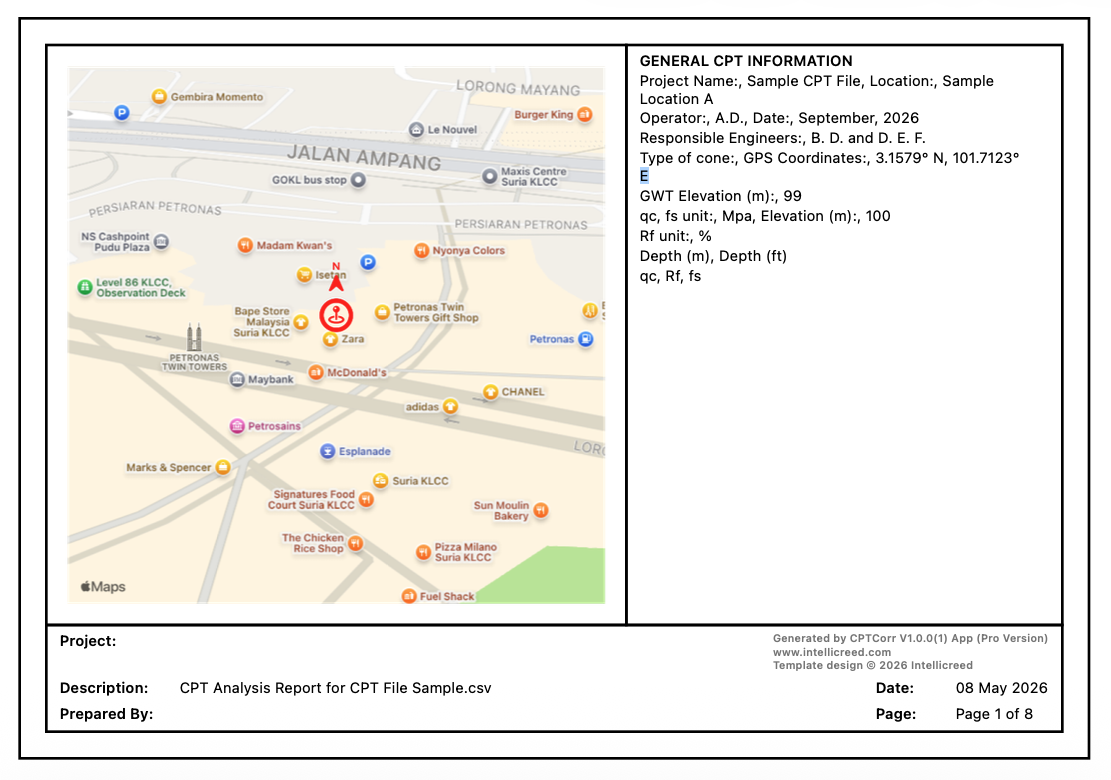
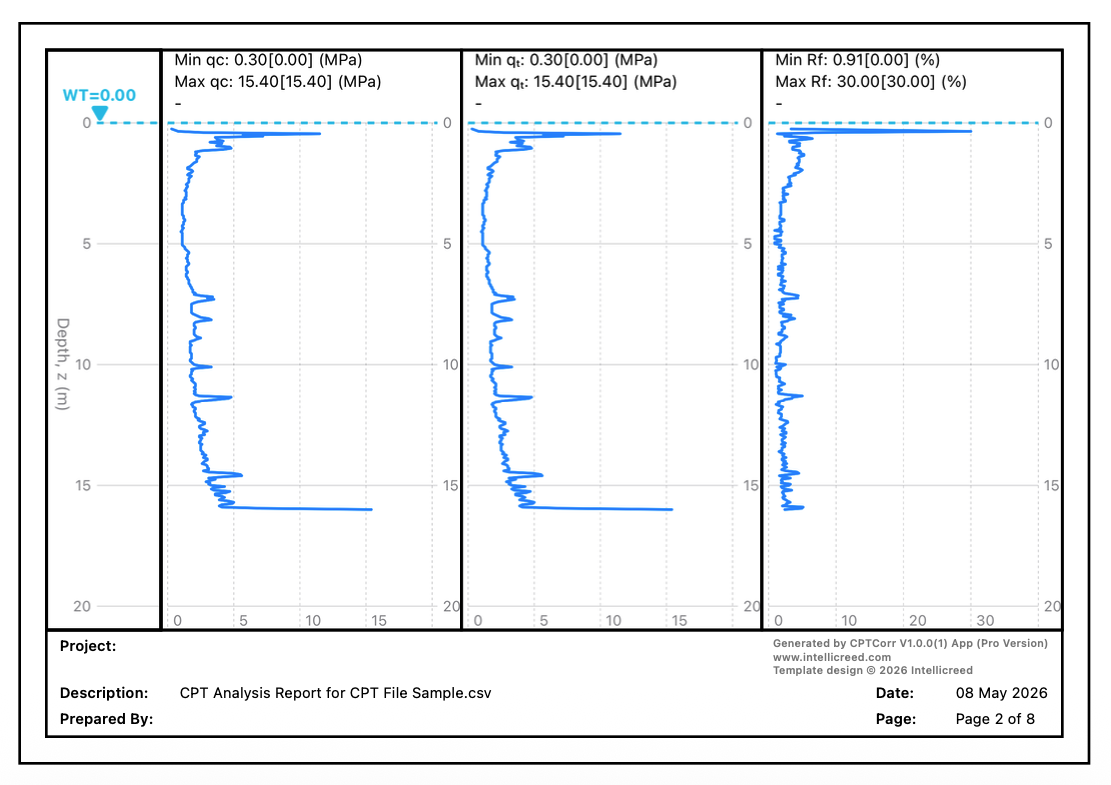
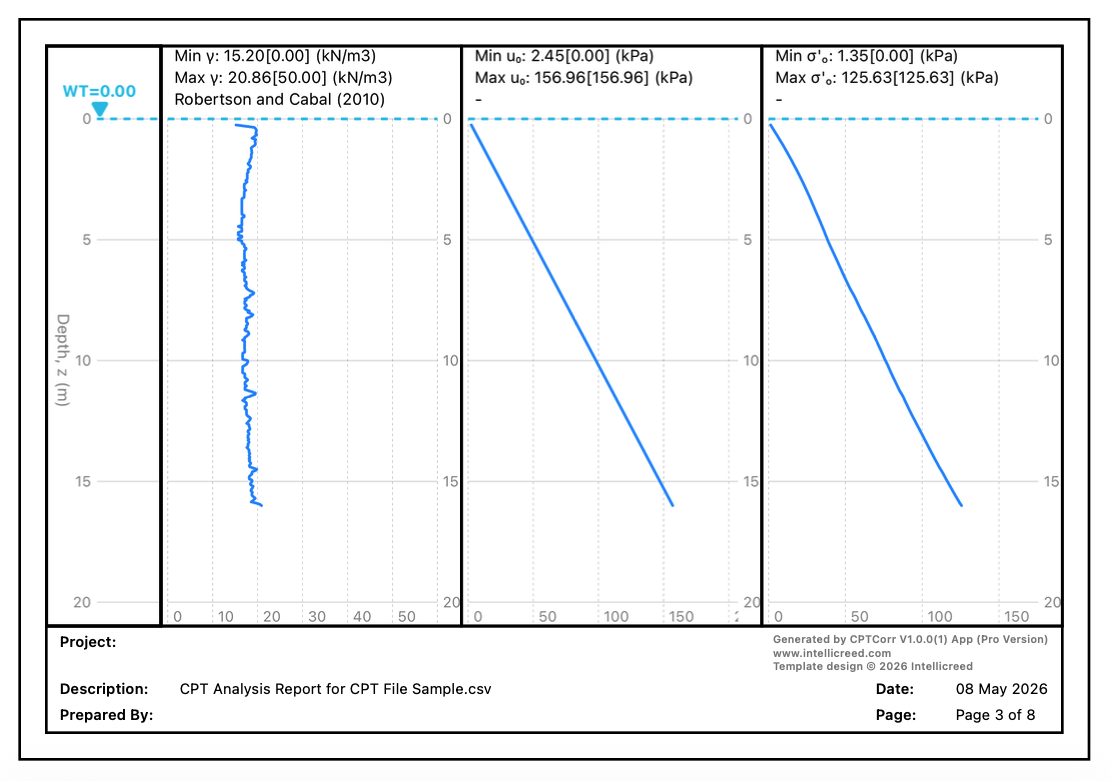
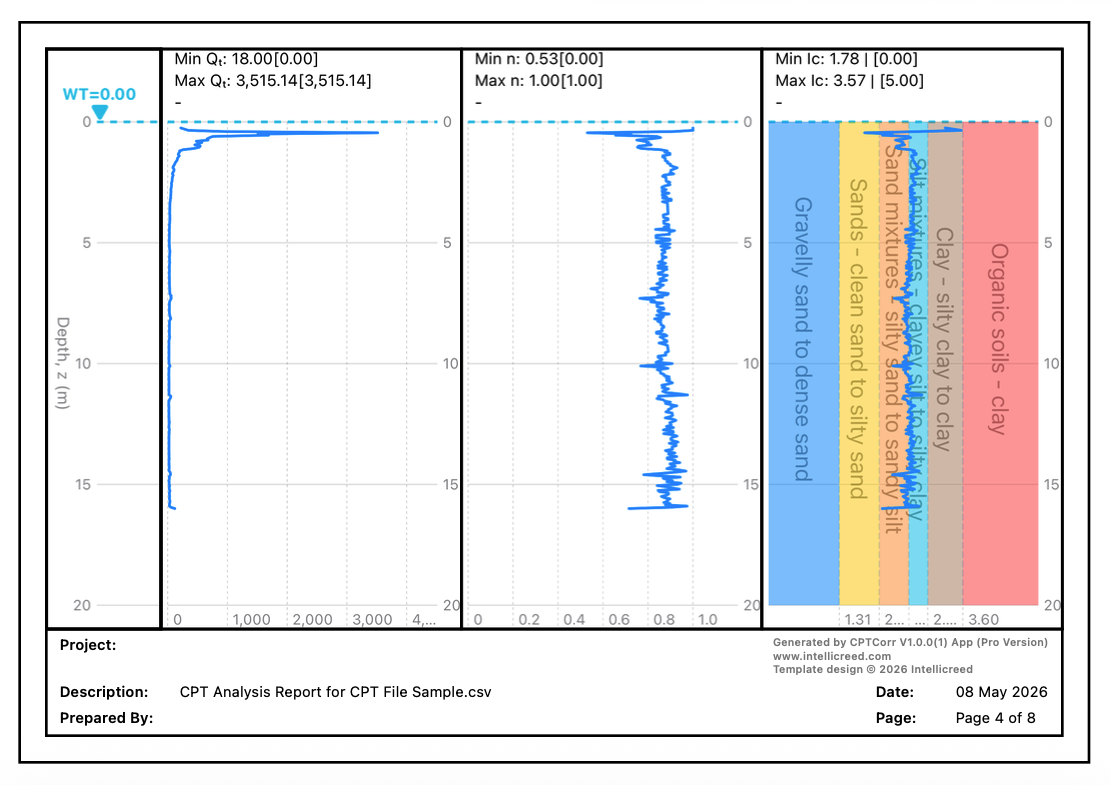
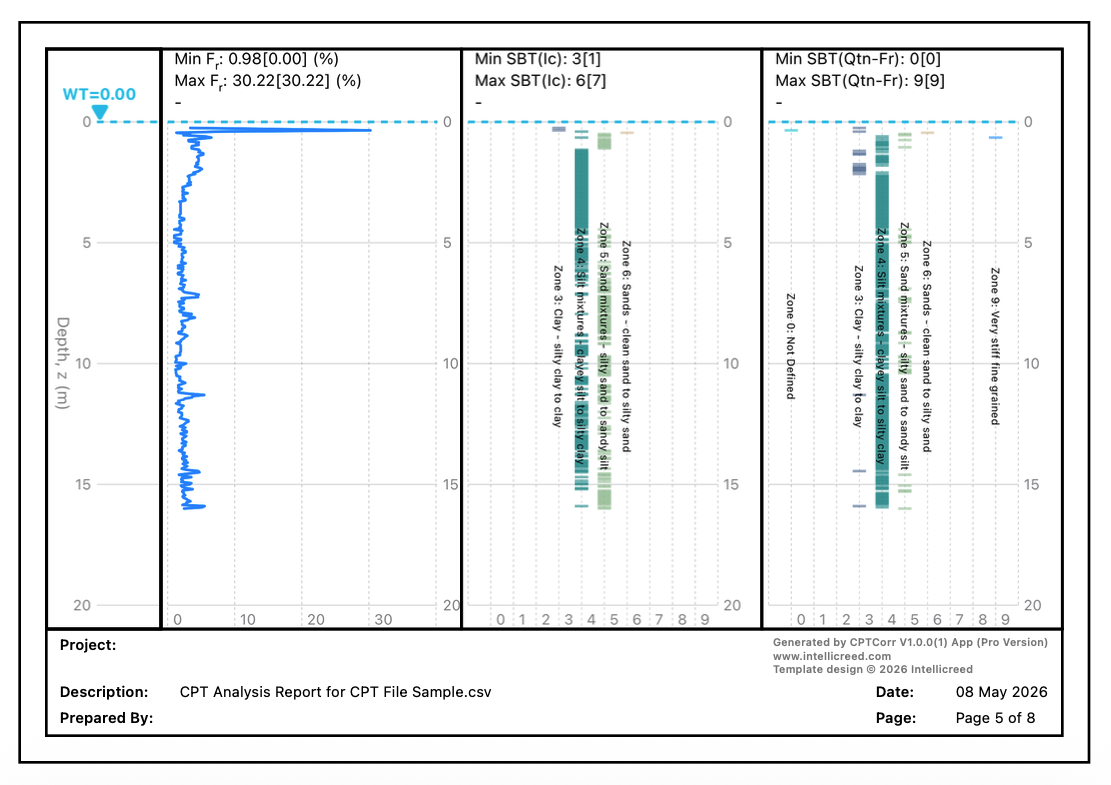
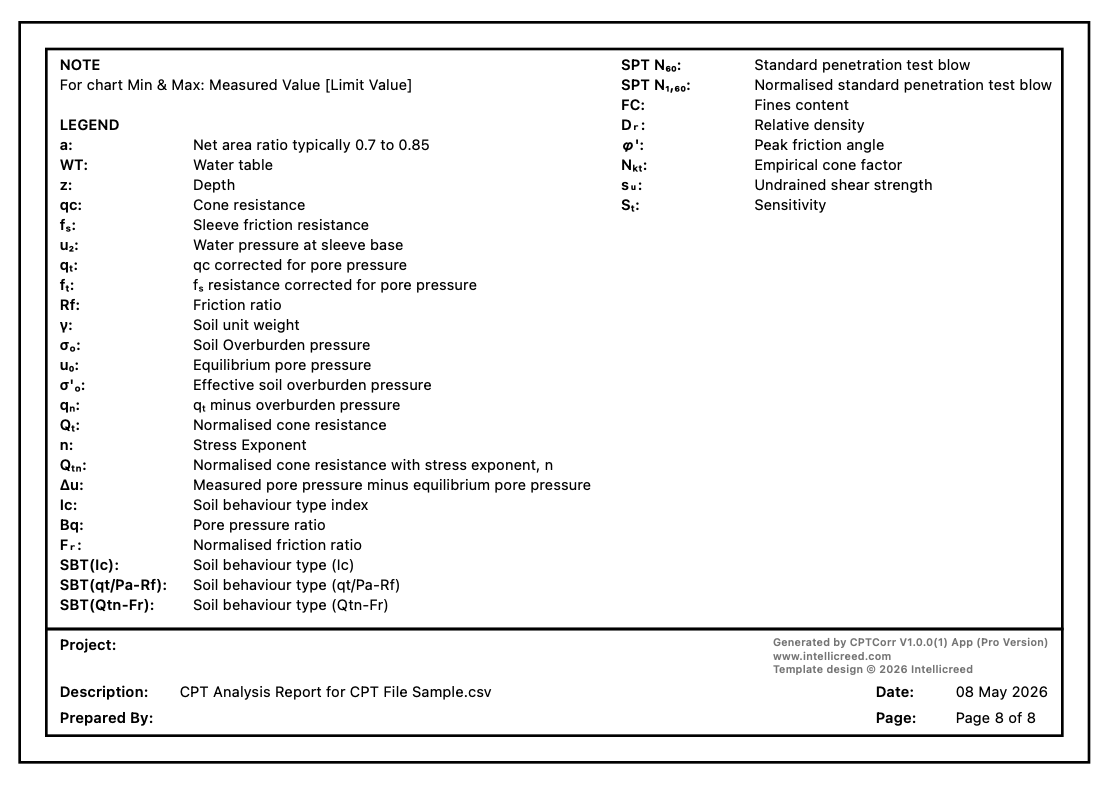
Note 1: Sample PDF showing CPT data with fictional Global Positioning System (GPS) coordinates.
Note 2: Only selected all CPT parameters shown in the sample PDF.
CPTCorr: From Desktop Spreadsheet to Mobility
Our journey into geotechnical software began early in our career in our previous role with another company, we were tasked with taking over and maintaining a Cone Penetration Test (CPT) spreadsheet that was prepared by a previous engineer.
The company wanted to keep using the tool but as it was built on Visual Basic for Applications (VBA) macro code, there was no one left who possessed the required programming knowledge required to maintain or troubleshoot it. Stepping into that gap was our first real exposure to how raw field data transforms into actionable soil profiles and empirical correlations. It also taught us a critical lesson about industry tools: spreadsheets are fragile, incredibly dependent on individual authors, and tethered entirely to desktop desks.
Even though mobile technology was not yet advanced enough to handle heavy engineering computations back then, a seed was planted. We realised that relying on fragile, macro-based spreadsheets was a massive risk for engineering firms.
We envisioned a robust and standalone application that could eliminate this hurdle and break the workflow free from office desktops, allowing engineers, whether standing in the field or sitting in an office, to process and analyse CPT data files the moment they were generated.
When we finally brought this app to life, our design philosophy revolved around creating a completely self-contained ecosystem. We wanted to eliminate the fragmented workflow of downloading files on one machine, running calculations on another, and formatting graphs on a third. To achieve this, we built a seamless pipeline that handles everything from handling raw data files to final reporting.
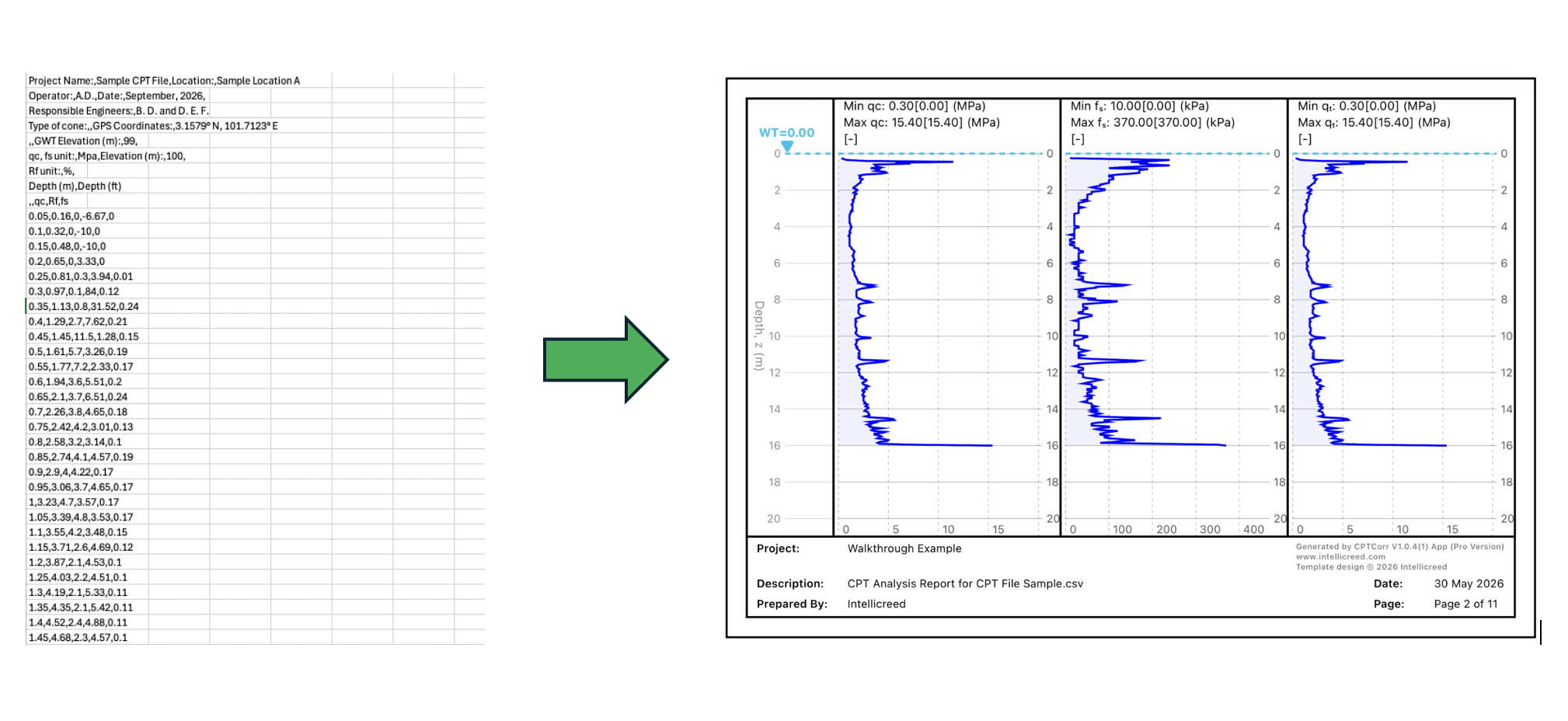
Figure 1: Field CPT Data File to CPT PDF ReportRecognising the critical importance of spatial context in geotechnical engineering, we integrated a mapping feature. If a CPT data file includes GPS coordinates, the app automatically plots the test point on a map, allowing users to instantly visualise the site layout and spatial distribution of their soundings. To close the loop, we developed an export to PDF feature, transforming complex soil mechanics calculations into a polished and review ready engineering reports right from your mobile device.
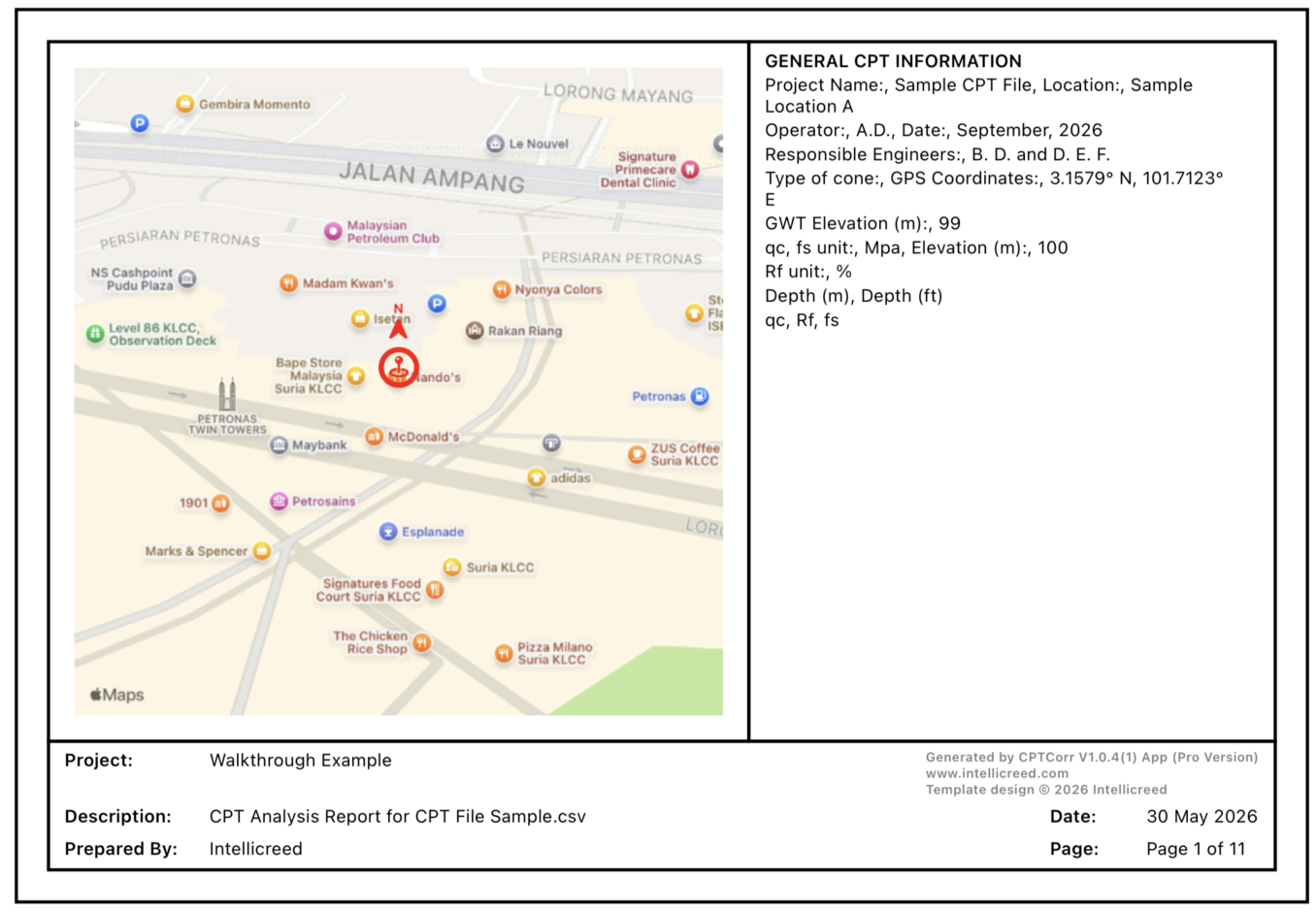
Figure 2: GPS Location in CPT PDF ReportGeotechnical engineering is unique because soil is inherently variable such that a correlation that accurately models a particular soil in one region might completely fail in the same soil of another region. Because soil mechanics and empirical equations are constantly evolving, we knew from day one that our app could never be a static tool.
Our development thought process is rooted in continuous adaptation. We are committed to constantly updating the platform, adding new correlations, and refining features to give engineers the flexibility to choose the right parameters for their specific site conditions.
This app is built by engineers, for engineers, and as we continue to expand its capabilities to meet the demands of modern practice, we count on your support and feedback to drive its success.

Figure 3: Soil Behaviour Type Plot on CPTCorrWe are incredibly grateful to our active subscribers whose support makes this app possible and keeps us innovating. Please feel free to drop your comments or queries.